The Best Ads Don't Look Like Ads.
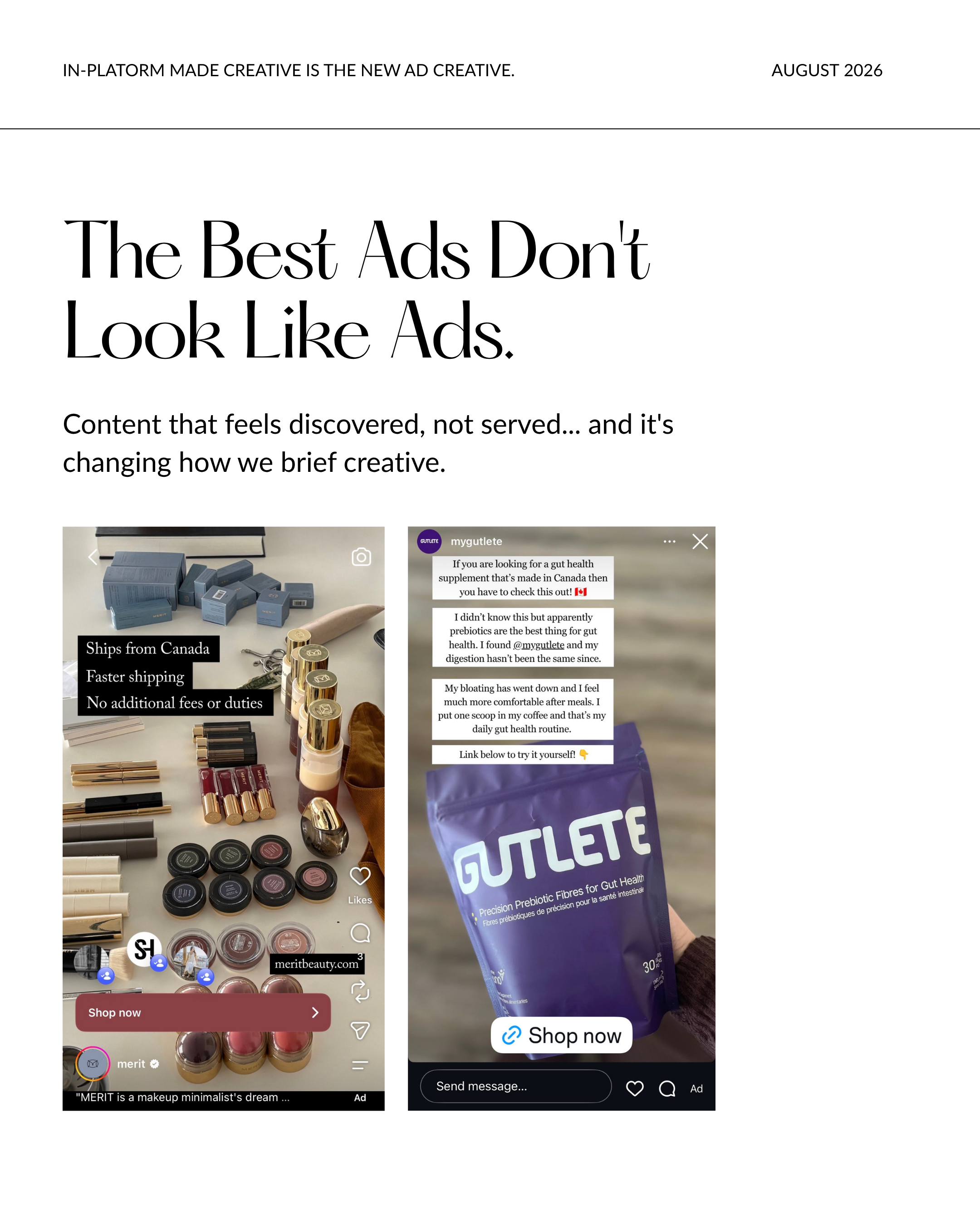
Content that feels discovered, not served, is changing how we brief creative → and it doesn't look like it's slowing down.
The trend is simple to describe and harder to execute well: in-platform text over polished brand type. Organic, real-life shots over perfectly staged ones. Video filmed in an actual bathroom, car, or kitchen instead of a styled set. The format itself builds trust before the product ever gets a chance.
The Idea Is That It Is An Ad, It Just Doesn't Look Like One.
The clearest examples take a genuine, unscripted moment → a real customer story, a mirror selfie, an off-the-cuff reaction, and turn it directly into paid creative. No polish, no product hero shot, just something that reads as a real person's post rather than a campaign. That's the whole trick: the ad borrows the credibility of organic content instead of trying to out-produce it.
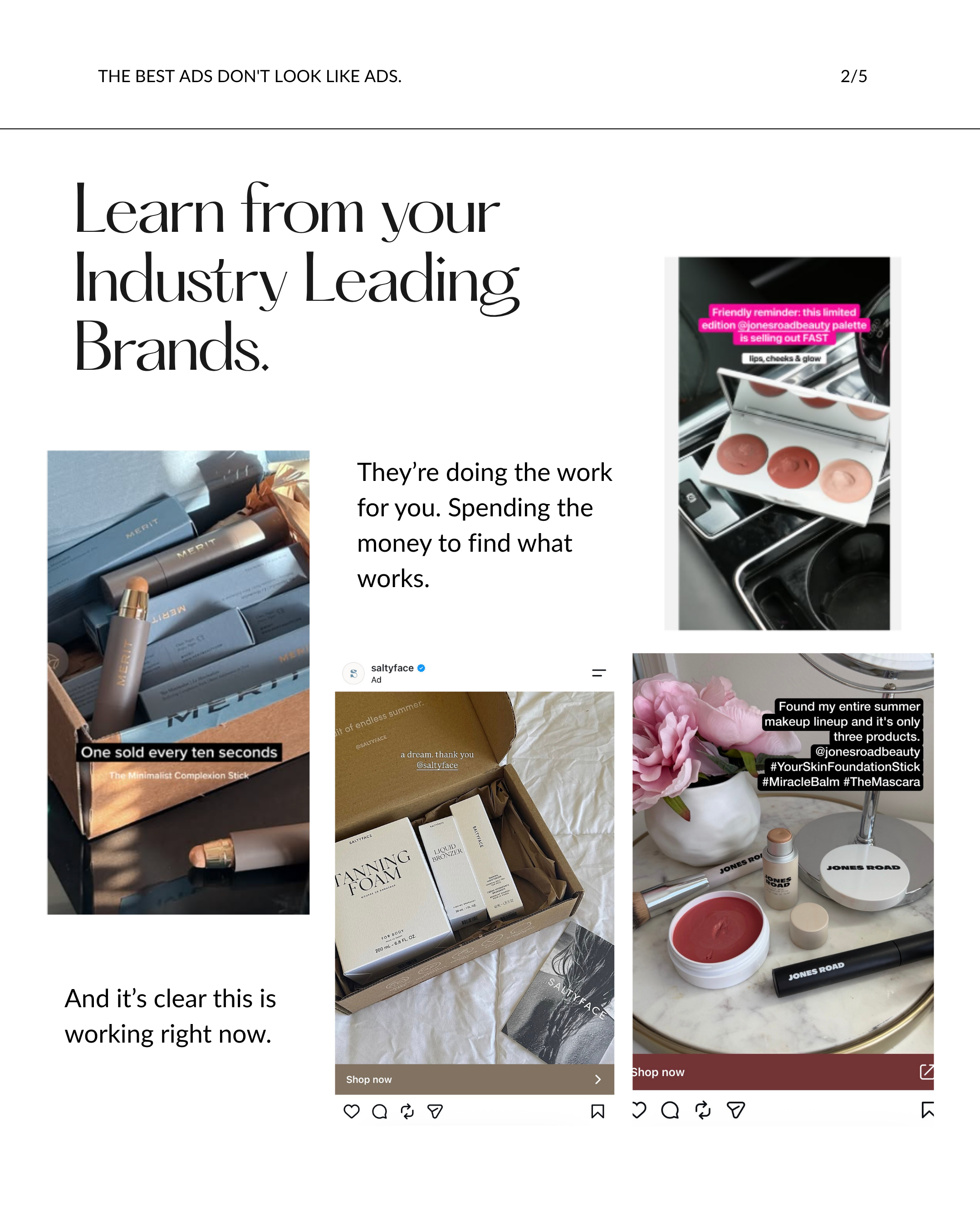
The Industry Leaders Are Already Doing the Work For You
Watching what's already working across established DTC brands is one of the fastest ways to find a format worth testing. Screenshot-style overlays, "one sold every ten seconds" urgency callouts, imperfect lighting, unboxing shots dropped straight into an ad unit → brands spending real money to find what converts are already validating these formats at scale. If a pattern keeps showing up across multiple unrelated brands, that's not coincidence; that's signal.
It's Not Confined to One Category
This isn't a beauty-only phenomenon. The same in-platform, discovered-feeling format is showing up in supplements, activewear, jewelry, skincare, and gut health → different products, same underlying formula: real setting, in-platform text and tags, imperfect lighting, a screenshot-style overlay standing in for polish.
You Can Apply This to Professional Photography Too
The format doesn't require abandoning quality photography → it requires layering in-platform text and native elements on top of it. A well-lit product shot with a "did you know?" callout box or a native-style price/offer tag reads as more real, relatable, and achievable than the same photo with slick brand typography. It's a small production change with an outsized trust impact.
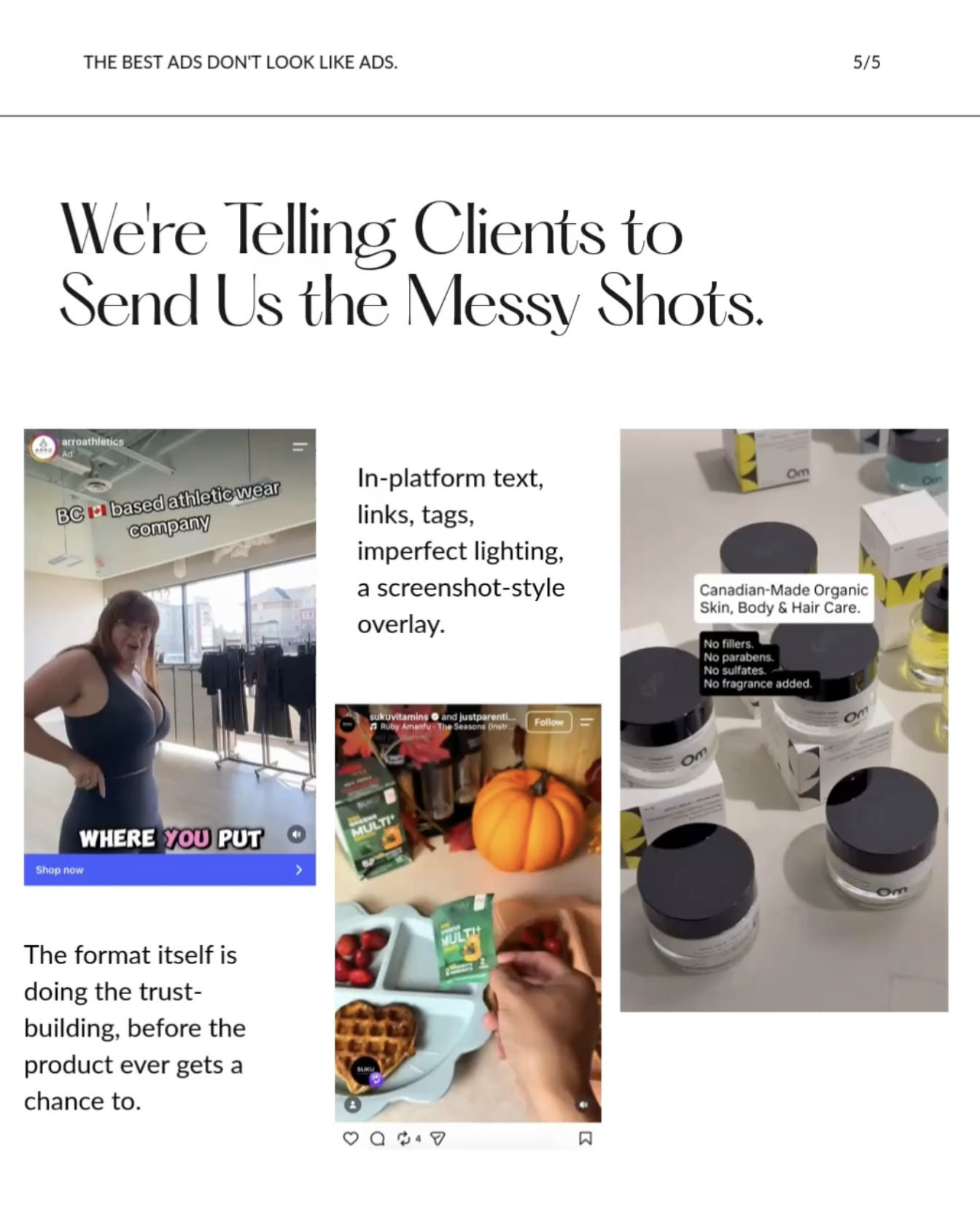
Why We're Asking Clients for the Messy Shots Now
This is the part that's actually changed how we brief creative: we're asking clients to send us in-platform text, unretouched product shots, and footage filmed in real spaces → a store, a kitchen, a car → rather than perfectly composed marketing assets. The format builds trust before the product ever gets a chance to make its case, which changes what "good creative" even means for a brief.
The Bottom Line
The best-performing ad right now often isn't the one that looks the most expensive to make → it's the one that doesn't look like an ad at all. If your brand's creative still reads as polished marketing from the first frame, that's worth testing against something rougher, more native, and more discoverable-feeling.